

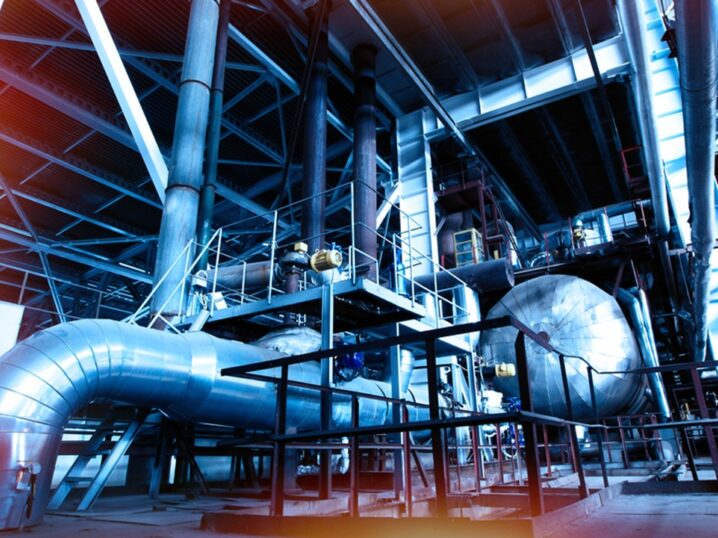
Understanding CDM 2015 in the Decommissioning and Demolition Design Phases
Why Competence, Early Planning and the Right Appointments Protect Clients in High-Hazard Industrial Environments
Across major hazard facilities and heavy industrial assets, the retirement of a plant follows a defined lifecycle: first decommissioning, then demolition. While distinct in purpose and risk profile, both phases are classified as construction work under CDM 2015, imposing specific legal duties on clients and dutyholders from the moment production ceases.
Many organisations do not fully recognise that CDM applies in full during decommissioning, long before any physical dismantling or demolition activities begin. Early misconceptions or incorrect appointments can expose clients to safety risk, cost growth, and regulatory scrutiny.
JAMES Ltd ensures operators are protected from the outset.
Decommissioning Under CDM: A Design-Led Phase From Day One
During decommissioning, the asset is prepared to an As Low As Reasonably Practicable (ALARP) state to dismantle and demolish. This includes isolations, draining, decontaminating, removal of residual inventory and hazardous materials identification, all of which require design decisions that directly influence future structural and demolition safety. The key output of decommissioning also being the asset in a documented known state that forms as part of Preconstruction Information.
Under CDM 2015, clients must:
- Appoint a Principal Designer (PD) for decommissioning design
- Provide clear and accurate Pre-Construction Information (PCI)
- Ensure engineering competence in decisions that increase or reduce risk downstream
- Notify HSE via F10 where thresholds are exceeded
Failure to recognise decommissioning as a design and construction phase results in unmanaged and undocumented decisions that complicate later demolition works.

Transition Into Demolition — A Change in Risk Profile and Design Responsibility
Once the asset is fully decommissioned and in a known state, responsibility shifts from process hazards to residual and structural hazards. Demolition requires its own design approach, informed by:
- Documented known states of systems, such as remaining inventories, known system feature hazards and known remaining process hazards
- Condition of ageing or degraded structures
- Temporary works and stability requirements
- Progressive change in load paths during removal
- Adjacent live plant or site operational constraints
- Asbestos and contaminated material still embedded within structures
These are demolition-specific engineering risks under CDM and require demolition design coordination, often delivered through a continuation of PD duties.
Demolition cannot be treated as an isolated activity. It is the engineered outcome of decommissioning and plant preparation design decisions.
Why Clients Must Appoint the Right PD at the Right Time
If a Principal Designer is not appointed for decommissioning or appointed without the correct demolition expertise, the CDM responsibility sits entirely with the Client. Across complex sites, this can lead to:
- Tender documentation lacking structural and risk clarity
- Contractor’s pricing unknowns as commercial risk allowances
- Programme delays while design issues are corrected mid-execution
- Instability events or preventable incidents arising from unknown behaviour
- Regulatory intervention due to CDM breaches
High-hazard assets demand Principal Designers who understand both phases and the interface between them.
That is where JAMES Ltd leads.
How JAMES Ltd Provides Assurance Across Both Phases
JAMES Ltd integrates engineering, CDM leadership and demolition Subject Matter Expertise (SME) to provide full lifecycle control:
During Decommissioning
- Hazard identification and design risk management
- Shutdown, isolation and inventory removal strategies
- Asset preparation strategies
- PCI development and information validation
- Tender strategy and contractor competence evaluation
During Demolition
- Engineering input to demolition method design
- Temporary works and stability review
- RAMS verification and monitoring
- Design change and risk escalation control
Our approach aligns with CDM 2015, BS 6187, BS 5975, CAR 2012 and best practice across COMAH and major hazard sites.
Clients gain a single source of leadership, compliance and technical assurance from shutdown through to full removal.

If You Are Entering Decommissioning or Planning Demolition
Whether your asset has recently shut down or is approaching end of life, early engagement ensures:
- CDM duties are correctly assigned
- Engineering decisions are documented and risk-informed
- Demolition contractors receive accurate and complete tender information
- Cost and timeline certainty are protected
- Safety remains controlled throughout site lifecycle change
JAMES Ltd delivers confidence, clarity, and compliance at every stage.
To discuss upcoming decommissioning or demolition programmes, please contact our team by telephone +44 333 090 7331 or email info@james-ltd.co.uk
