

Navigating the Middle East’s New Industrial Era: Overcoming the Challenges of Safe and Sustainable Decommissioning
Across the Middle East, a new phase of industrial transformation is taking shape. National strategies such as Saudi Arabia’s Vision 2030 and the UAE’s Net Zero 2050 programme are driving rapid diversification away from traditional hydrocarbons and toward cleaner, more sustainable energy systems.
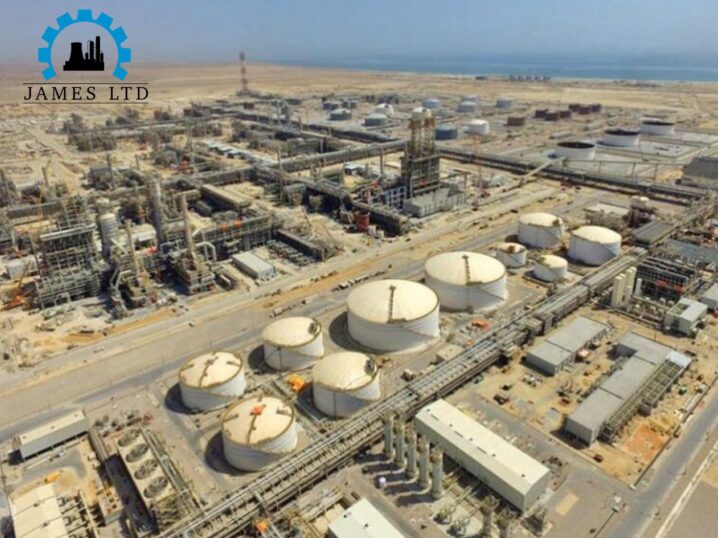
As this transition gathers pace, a growing challenge is emerging: how to safely and responsibly retire the legacy assets of the past. Many of the region’s oil refineries, petrochemical plants, and power stations were never designed with decommissioning in mind. As they reach the end of their operational life, they require careful, structured dismantling that protects people, the environment, and future investment potential.
Drawing on our experience supporting clients on decommissioning and closure projects across Europe, Asia, and other regions, JAMES Ltd has seen first-hand the challenges and opportunities these programmes bring. Many of the lessons learned from global projects particularly around planning, supply chain capability, and safety leadership can be directly applied to the Middle East to help organisations save cost, protect programme, and, most importantly, safeguard health and safety.
This article outlines several key themes that organisations in the Middle East should consider when planning or delivering industrial decommissioning and demolition projects. The lessons are drawn from decades of international experience and are intended to help shape safe, efficient, and sustainable outcomes across the region.
Understanding the Challenge
Industrial facilities in the Middle East are among the largest and most integrated in the world. Many occupy areas comparable to small cities, with extensive networks of process units, utilities, and support infrastructure. Their complexity means decommissioning is not a simple reversal of construction it is a unique engineering discipline requiring its own planning, methods, and culture.
While the region has substantial investment capacity, there remains a shortage of local supply chain experience in large-scale decommissioning. This gap introduces uncertainty in programme and cost performance and can heighten environmental and safety risks. Addressing these issues early is essential to avoid delays, scope escalation, or reputational impact.
(For examples of complex industrial dismantling projects, see our La Collette Power Station and Offshore Platform Decommissioning and Demolition Blog's.)
Risk Management and Safety Leadership
Successful decommissioning begins with a clear understanding of risk. Projects should be led by subject matter experts and experienced client engineers who can identify potential hazards before they occur and design systems that prevent them from developing into incidents.
Experience from mature global markets shows that the highest-performing projects share certain characteristics: structured governance, early hazard identification, and a culture where safety leadership is visible at every level. Using ISO-accredited management systems, consistent processes, and regular review points helps ensure that safety, compliance, and environmental protection remain embedded throughout the life of the project.
(Please also read out other blog's on decommissioning: The Problem: Missing or Incomplete Site Information and Global Feasibility Studies for Decommissioning and Demolition Projects)
Programme Certainty through Realistic Planning
Decommissioning projects are often underestimated. Activities such as isolation, cleaning, dismantling, and waste management can take far longer than anticipated if not properly planned. Drawing on international benchmarks and experience can help organisations recognise where the common pitfalls lie and how long each phase typically requires.
Independent, honest programme reviews are invaluable. They allow both clients and contractors to build schedules that are achievable and transparent, rather than aspirational. Early, structured planning gives decision-makers the confidence to align follow-on construction or redevelopment work, leading to greater overall cost and schedule certainty.
Decommissioning should always be treated as a multidisciplinary exercise that involves engineering, environmental science, logistics, and stakeholder management. The earlier these disciplines are integrated, the smoother and safer the project delivery will be.
Achieving Cost Efficiency through Structure and Foresight
Experience shows that spending the right time, effort, and money during the decommissioning planning phase can make—or break—a project. The key lies in gathering high-quality pre-construction information. Surveys, studies, and investigations must be scoped correctly, executed to the right standard, and interpreted by professionals who understand what data demolition contractors actually need.
Well-managed surveys provide the factual foundation for safe and predictable project delivery. HazDem and HAZOP studies are particularly valuable for identifying and managing process-related hazards as plants are prepared for dismantling.
A structured, informed approach reduces rework, prevents late changes, and provides true cost certainty. By combining practical experience with disciplined project management, organisations can significantly reduce unnecessary expenditure while maintaining high standards of safety and environmental compliance.
Sustainability and the Circular Economy
Sustainability should be at the core of every decommissioning and closure project. Gathering detailed information on plant materials, waste streams, and potential recycling opportunities allows teams to plan for maximum recovery and reuse.
Many sites contain materials that do not fit neatly into standard waste classifications. Without specialist input, these can easily be mislabelled as hazardous, increasing cost and environmental burden. Mapping out each waste stream, supported by targeted surveys and technical assessments, helps determine the most appropriate—and sustainable—routes for disposal or recycling.
Equally important is the development of local capability. Upskilling the regional supply chain in sustainable decommissioning and demolition methods delivers benefits far beyond a single project. As local contractors gain experience, efficiency improves, programme delays reduce, and cost predictability increases. This in turn strengthens the wider industrial base and supports national goals for economic diversification.
Collaboration and Knowledge Transfer
The success of decommissioning projects in the Middle East will depend on collaboration between clients, consultants, contractors, and regulators. Knowledge sharing and capability development are vital. Many organisations in the region have extensive operational experience but limited exposure to asset retirement/decommissioning. By drawing on lessons from established international projects, they can accelerate the learning curve and avoid repeating known mistakes.
Upskilling the local supply chain has a direct impact on both cost and programme performance. As expertise grows, projects run more smoothly, procurement becomes more efficient, and the need for overseas specialist support gradually decreases. This transfer of knowledge not only improves delivery outcomes but also contributes to national sustainability and employment goals.
Cultural awareness is equally important. Understanding local regulations, working practices, and communication styles helps integrate international standards within regional frameworks. When global and local knowledge combine, projects achieve a higher level of safety, efficiency, and stakeholder confidence.
Health, Safety, and Environmental Considerations
Ageing industrial assets can present complex safety and environmental challenges corrosion, contamination, asbestos, and other hazardous materials are common. A proactive approach to risk assessment, backed by thorough documentation and inspection, is essential.
Environmental protection should extend beyond compliance. Effective segregation of waste, minimisation of emissions, and carbon-reduction initiatives not only protect the environment but also reduce overall project cost and improve community perception. Planning decommissioning with sustainability in mind ensures that facilities are dismantled responsibly and that land can be repurposed for future development with minimal remediation.
Looking Ahead: A Regional Opportunity
Decommissioning and demolition are integral parts of the Middle East’s industrial future. As nations move toward cleaner energy and smarter manufacturing, responsible asset retirement will become a defining element of progress. By investing in planning, safety, sustainability, and capability development today, the region can build a resilient and skilled decommissioning industry for the decades ahead.
Sharing Global Lessons through a Decommissioning and Closure Workshop
Having supported clients in managing decommissioning and closure projects around the world, JAMES Ltd is keen to share its lessons learned with organisations across the Middle East. By understanding what has worked elsewhere and where challenges have arisen—regional stakeholders can develop safer, more efficient, and more sustainable decommissioning programmes.
To support this journey, JAMES Ltd is offering an introductory Decommissioning and Closure Workshop. The session explores the key considerations that shape a successful project—risk management, planning, sustainability, and supply chain readiness and draws on international experience to illustrate what works and why.
The aim is to provide practical guidance to clients, regulators, and contractors seeking to develop safe and sustainable decommissioning programmes across the Middle East.
Organisations interested in attending or hosting a workshop can contact JAMES Ltd for further details.
